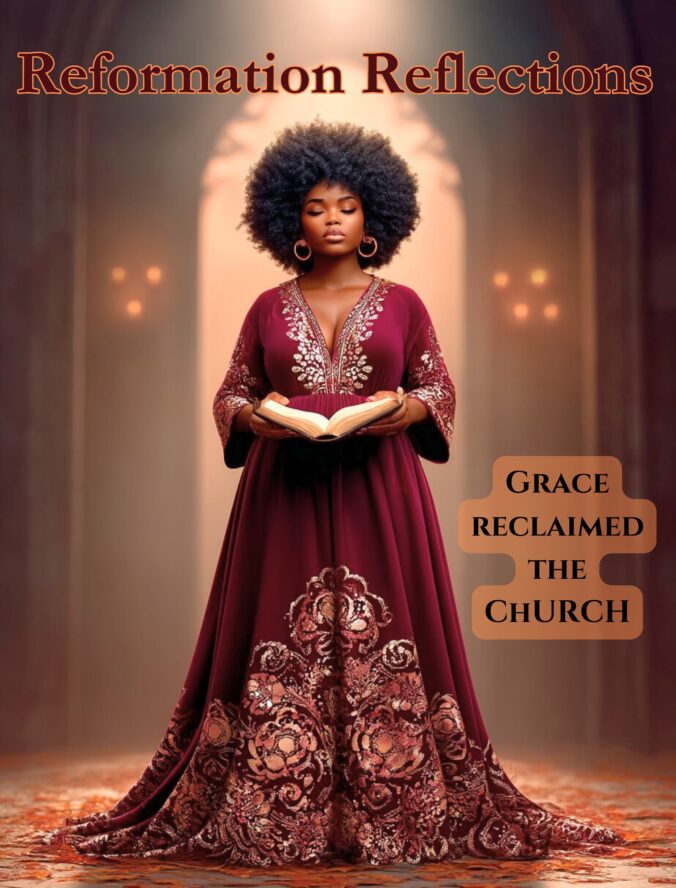
Every October, believers around the world pause to remember an event that changed everything — the Protestant Reformation.
It all began on October 31, 1517, when a German monk named Martin Luther nailed his 95 Theses to the church door in Wittenberg. He wasn’t trying to start a war — he was calling the Church back to the truth of Scripture. That single act set off a movement that echoed across Europe, shaking the foundations of religion, politics, and culture.
But here’s what we often forget — the Reformation wasn’t about rebellion or pride. It was about redemption. It was about recovering the beauty of the biblical gospel that had been buried under centuries of superstition, corruption, and man-made tradition.
When the Church Lost Sight of Grace
By the 1500s, the Church had become powerful, political, and tragically compromised. Leaders sold indulgences — documents claiming to reduce punishment for sin. Others bought their positions or lived in open sin while preaching holiness to others.
Meanwhile, everyday people couldn’t even read the Bible for themselves. Scripture was locked away in Latin, and most priests didn’t (or couldn’t) explain it clearly. The message people heard was this: You can be saved — but only if you work hard enough.
Then Luther opened his Bible and read these words from Romans 1:17 (ESV) —
“The righteous shall live by faith.”
That verse changed everything.
For the first time, Luther saw that salvation isn’t earned — it’s received. We are declared righteous not because of what we do, but because of what Christ has already done. Grace isn’t something we achieve; it’s a gift we accept by faith.
The Gospel Recovered
That discovery set off a holy wildfire. Men and women across Europe began to rediscover the power of God’s Word. Reformers like John Calvin, Ulrich Zwingli, and John Knox carried the torch, declaring that:
- Scripture alone is our final authority,
- Grace alone saves us,
- Faith alone receives that grace,
- Christ alone is the Savior, and
- All of it is for God’s glory alone.
They weren’t introducing new ideas — they were returning to the truth the apostles had already proclaimed. They believed that the Church must be anchored in the Bible, not in tradition or human power.
Why It Still Matters
The Reformation isn’t just a moment in history — it’s a mirror for us today.
We still live in a culture obsessed with effort, performance, and “manifesting” blessings. Too often, even in the Church, we hear more about prosperity and positivity than repentance and grace.
The Reformers remind us that:
- Truth matters more than trends.
- Scripture stands above culture.
- Salvation is by grace, not goodness.
- Christ alone is enough.
Reformation Day isn’t about dividing Christians — it’s about uniting us around the unchanging gospel.
The Heart of It All
When you strip away the arguments and the history books, the heartbeat of the Reformation is simple:
God saves sinners — completely by His grace, and completely for His glory.
That truth shook the world 500 years ago, and it still brings peace to every believer who realizes that Jesus truly finished the work.
So this October, don’t just remember the Reformation — rejoice in the gospel.
Open your Bible.
Read it for yourself.
And thank God that His grace still reaches down to us, generation after generation.
“My conscience is captive to the Word of God.” — Martin Luther
Faithful Femme Noir Reflection
Sisters, this month is a perfect reminder that Scripture must shape everything — our worship, our womanhood, our work, and our witness.
When we root our faith in the truth of God’s Word, we stop striving to earn His love and start resting in what Christ has already finished. The Reformation reminds us that our value isn’t defined by culture or comparison — it’s defined by the cross.
So let’s be women of the Word — steadfast, discerning, and full of grace. Let’s stand firm on the same solid rock that turned the world upside down five centuries ago.
Faithful Femme Noir — where faith, beauty, and truth walk hand in hand.
Leave a Reply